True vs. False Morel — Field Identification Guide
morelfinder.com · Always cook morels before eating.
✓ True Morel
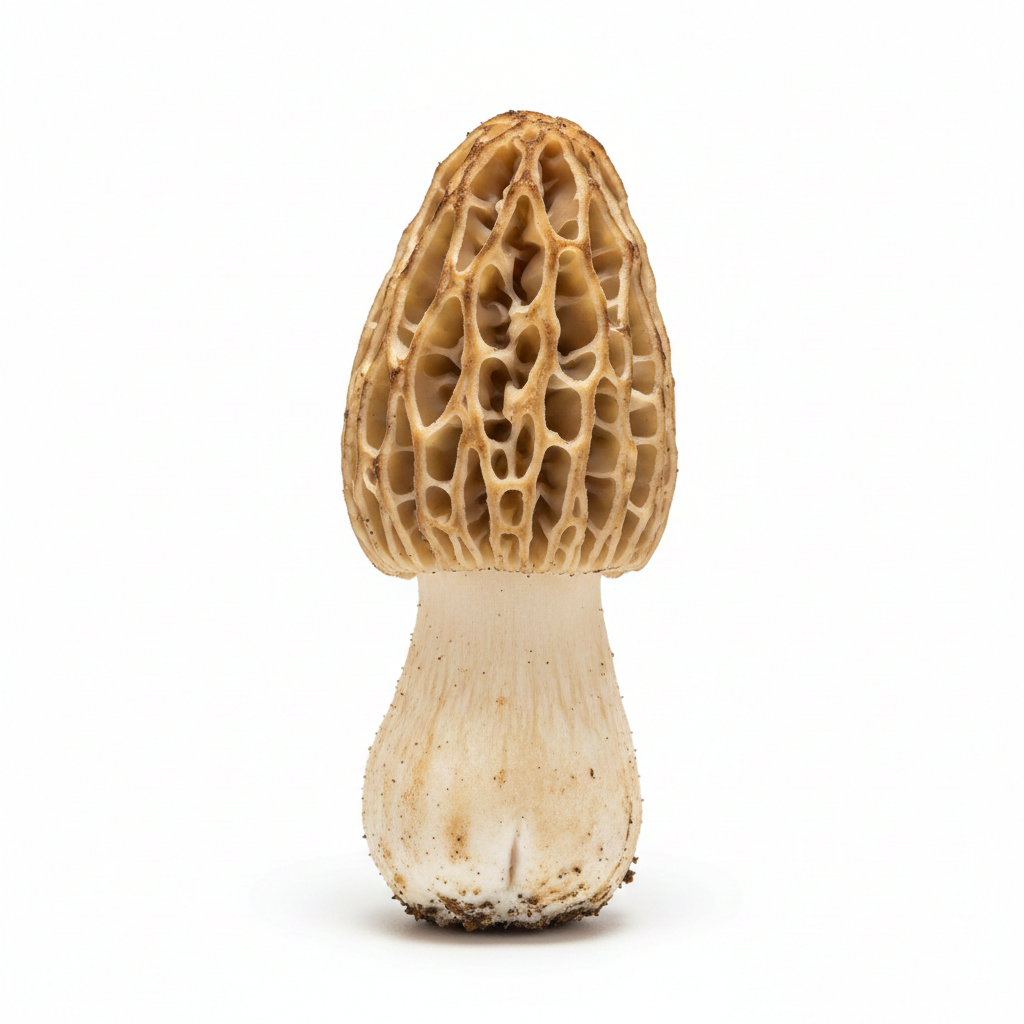
Yellow / Black Morel
Morchella americana, M. angusticeps
- ✓Cap: Deeply pitted, honeycomb/sponge-like ridges and pits
- ✓Cap attachment: Fully fused to stem all the way to the base
- ✓Interior: Completely hollow — stem and cap form one hollow chamber
- ✓Color: Tan, yellow, gray, or black (darkens with age)
- ✓Stem: Pale, slightly ribbed or granular, hollow
- ✓Season: Spring only (Mar–Jun depending on latitude)
✅ EDIBLE — always cook first
✗ False Morel
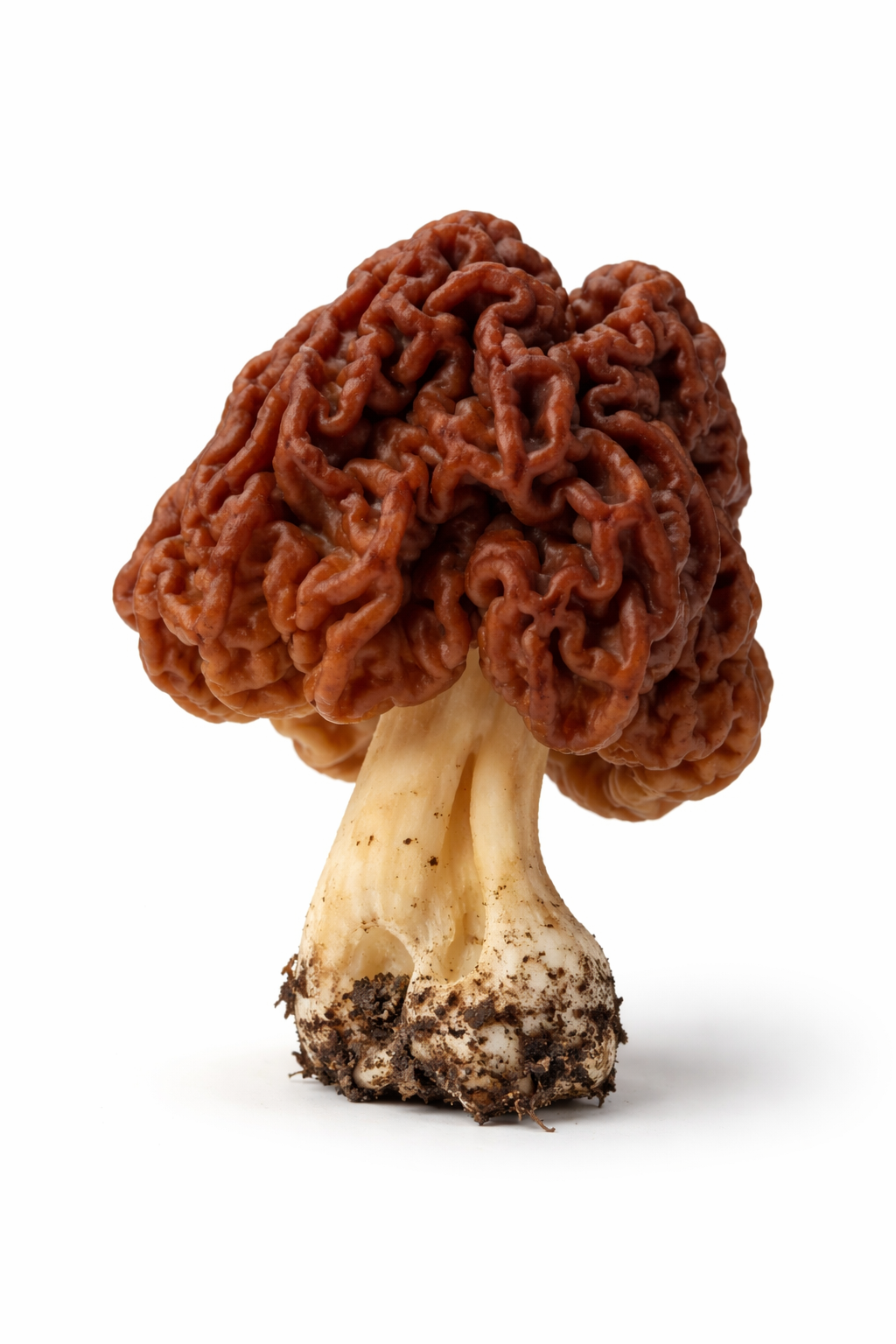
Brain Mushroom / Turban Fungus
Gyromitra esculenta, G. caroliniana
- ✗Cap: Wrinkled, brain-like, saddle-shaped, or lobed — NOT pitted
- ✗Cap attachment: Attached only at top; lower portion hangs free like a skirt
- ✗Interior: NOT hollow — fibrous chambers, cottony material inside
- ✗Color: Reddish-brown to dark brown; cap often darker than stem
- ✗Stem: Often wavy, ribbed, or with interior chambers
- ✗Toxin: Contains gyromitrin — can be fatal, especially when raw
⛔ TOXIC — do not eat
~ Half-Free Morel
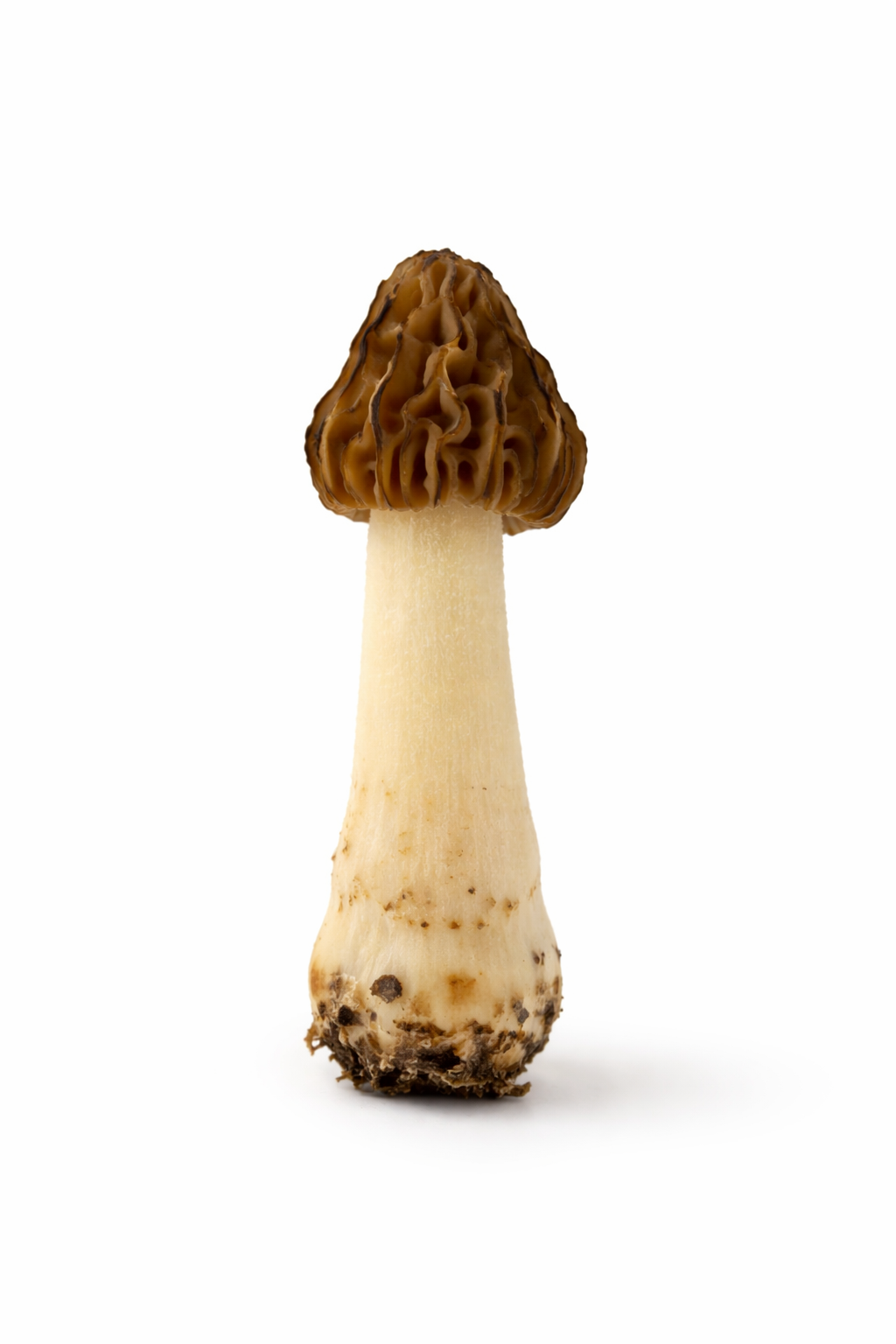
Half-Free Morel
Morchella punctipes / M. populiphila
- ~Cap: Pitted like a true morel — honeycomb pattern present
- ~Cap attachment: Bottom half of cap hangs FREE from stem (key difference from true morel)
- ~Interior: Hollow throughout — stem and cap cavity connect
- ~Cap size: Cap is short relative to long stem (looks "top-heavy")
- ~Season: Often appears slightly earlier than yellow morels
- ~Flavor: Milder than yellow morel; still worth collecting
✅ EDIBLE — a true morel; cook first
The One Field Test That Matters
Cut it in half vertically, stem to cap.
A true morel is completely hollow — one open cavity from the base of the stem to the tip of the cap.
If you see any material inside — chambers, fibers, or cotton — do not eat it. No exceptions.
🌳 Best Habitat to Search
🌳Dying elm & ash trees — look within 20 ft of the base as bark loosens
🍎Old apple orchards — abandoned sites produce year after year
🌊Stream banks — moisture + hardwoods = ideal conditions
☀️South-facing slopes — warm 1–2 weeks earlier in spring
🔥Last year's burn areas — post-fire morel flushes can be massive
🌲Forest edges — where trees meet open fields or clearings
🌡️ Conditions & Cleaning
🌡️Soil temp trigger: 50–55°F at 4″ depth. Daytime highs 60–70°F, nights above 40°F.
🌧️Best timing: Hunt 2–3 days after a warm spring rain.
🧺Use a mesh bag — spores spread as you walk, seeding future crops.
💧Cleaning: Halve lengthwise, rinse briefly in salted water, pat dry.
🍳Always cook — even true morels contain small amounts of hydrazine when raw. Heat neutralizes it.
❄️Storage: Refrigerate up to 5 days. Dry at 95°F for long-term storage.